
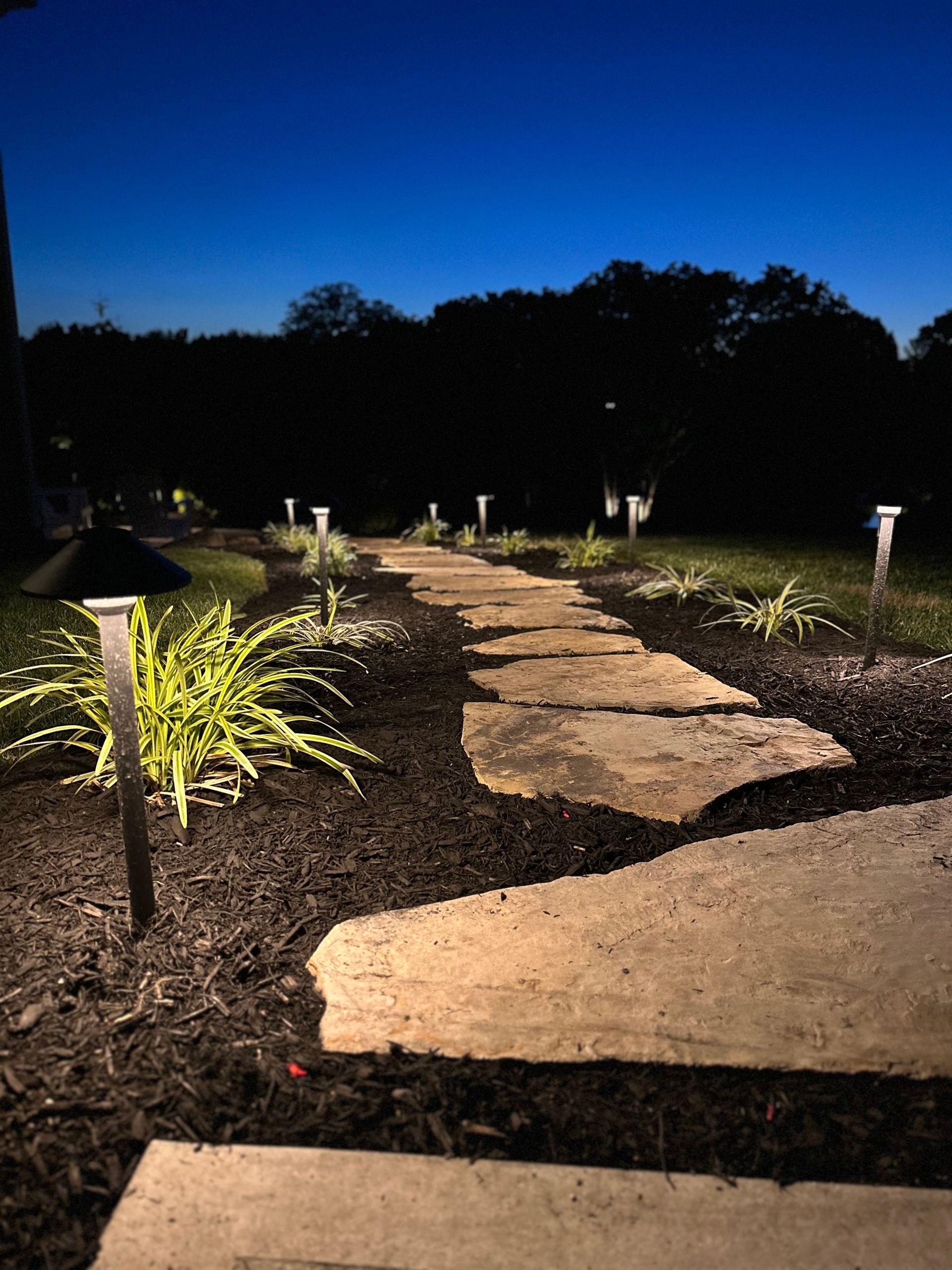
Light Your Property After Dark
Outdoor lighting installation in Atlanta, Indiana for pathways, gardens, and architectural features.
If your walkways in Atlanta are difficult to navigate at night or your landscaping disappears after sunset, outdoor lighting adds visibility and definition. You are choosing fixtures that highlight plantings, mark edges, and illuminate entry points without glare or light pollution that disturbs neighbors.
Traditional Concepts installs path lighting, garden spotlights, and patio fixtures designed for year-round outdoor exposure. Each fixture is wired through low-voltage systems that reduce energy use and allow safe installation near plants and water features. Placement is planned to avoid shadowed gaps, direct light downward where needed, and accent architectural details or specimen trees that define your property.
Contact Traditional Concepts to schedule a free quote and discuss lighting placement for your Atlanta property.
Placement Strategy for Safety and Appeal
Your lighting installation in Atlanta begins with site evaluation to identify walkways, steps, and focal points that need visibility. Traditional Concepts uses path lights spaced evenly to mark edges without overlighting, uplights positioned to graze walls or trees, and directional fixtures that illuminate patios or seating areas.
After installation, you will notice clear sightlines along walkways, reduced tripping hazards near steps or grade changes, and soft accent lighting that adds depth to garden beds and hardscapes. Fixtures are secured with ground stakes or mounted to structures, and wiring is buried to prevent exposure to mowers or foot traffic.
Traditional Concepts uses LED bulbs that withstand cold temperatures and moisture without dimming or burnout, and timers or photocells automate operation so lights turn on at dusk and off at dawn. The system is expandable if you add plantings or extend pathways in the future.
Homeowners often ask about fixture durability, voltage requirements, and how lighting affects monthly energy costs before committing to outdoor lighting installation.
What Homeowners Want to Know First
What makes low-voltage lighting safer than standard wiring?
Low-voltage systems run at 12 volts instead of 120, which reduces shock risk and allows installation near water features or in planted areas. Traditional Concepts uses transformers to step down household voltage before it reaches the fixtures.
How do you avoid overlighting or glare?
You will receive fixture placement designed to direct light downward or toward specific features, not into windows or adjacent properties. Traditional Concepts uses shielded fixtures and adjustable heads to control beam spread.
When should I replace outdoor lighting fixtures?
You should replace fixtures when lenses crack, housings corrode, or internal wiring fails. LED bulbs last years longer than halogen, which reduces replacement frequency and maintenance visits.
Why does lighting improve security around my home?
Lighting eliminates shadowed hiding spots near entries and windows, and motion-activated fixtures alert you to movement. Traditional Concepts positions lights to cover vulnerable areas without creating harsh floodlight effects.
What maintenance does outdoor lighting require?
You will need to clean lenses periodically to remove dirt and debris, check connections for corrosion, and trim plants that block light paths. Traditional Concepts inspects wiring and adjusts fixture angles as landscapes mature.
Traditional Concepts designs outdoor lighting in Atlanta that balances safety, visibility, and curb appeal while using durable fixtures built for Indiana weather. Schedule a free quote to review placement options and fixture styles that fit your property.